Software Strategy
Tech StackArchitecture
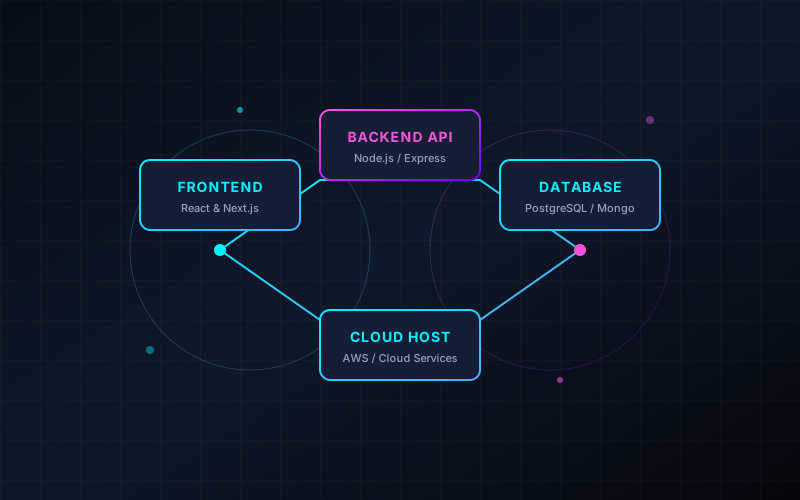
How to Choose the Right Tech Stack for Business Applications
A practical guide for businesses evaluating frameworks, databases, and cloud platforms for their next software project.
7 min read
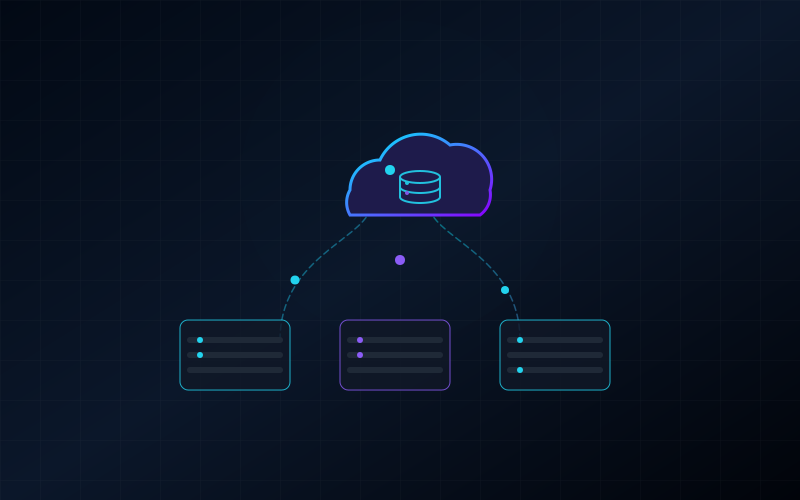
Cloud migration can improve scalability, reliability, and operational flexibility. However, moving business applications without a structured plan can create downtime, data issues, and unexpected costs.
Begin with an application inventory. Document dependencies, integrations, data volumes, and compliance requirements. Not every system should move to the cloud in the same way or on the same timeline.
Follow these key phases to ensure migration goes smoothly:
“"Lift-and-shift migration is simple, but refactoring databases for managed cloud services provides the real long-term cost benefits."
Measure results after migration. Track performance, availability, and cost against baseline metrics. Cloud providers charge based on capacity allocations, so monitor CPU metrics to downscale oversized machines.
Let's build a secure, highly scalable solution customized to solve your specific workflows and drive operational growth.
Talk to our ExpertsA practical guide for businesses evaluating frameworks, databases, and cloud platforms for their next software project.
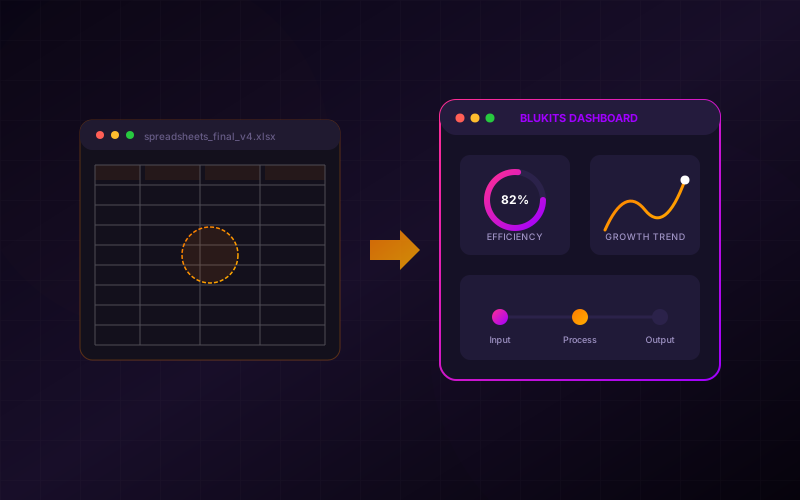
Learn when spreadsheets and off-the-shelf tools stop working and custom software becomes the smarter investment.
Essential security practices every business should consider when building or maintaining customer-facing web applications.
Speak with BluKits Technologies to discuss your requirements and receive a practical delivery plan.